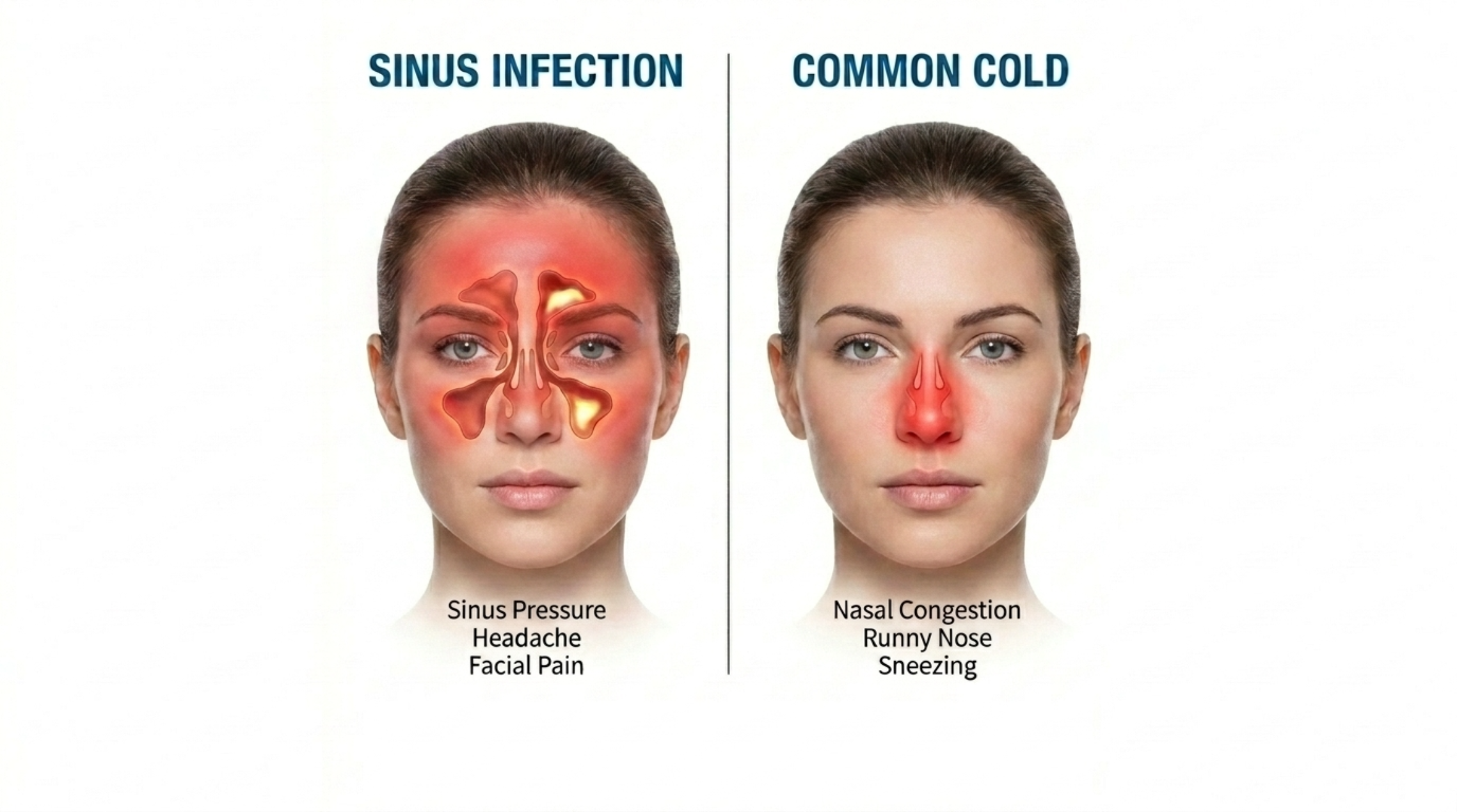
Sinus Infection vs Common Cold: How to Tell the Difference in Singapore’s Climate
A runny nose and blocked sinuses are common in Singapore’s tropical climate — but how do you know whether you have a common cold or sinusitis? The key differences come down to how long your symptoms last, whether you have facial pain or pressure, and the nature of your nasal discharge. Getting this right matters, because the two conditions call for different approaches to care.
At Asian Healthcare Specialists (AHS), our collaborative team, which includes specialists in otorhinolaryngology (ENT) and family medicine, is familiar with how local environmental factors can affect these conditions. This guide aims to help you distinguish between them clearly so that you can take informed steps towards feeling better.
Understanding the Common Cold
A common cold is a viral infection of your upper respiratory tract—primarily your nose and throat. It is usually a mild, self-limiting illness, with most people recovering within a week to ten days.
Typical Symptoms:
- Runny or stuffy nose
- Sneezing
- Sore throat
- Mild cough
- A general feeling of being unwell
- Occasionally, a low-grade fever
In our climate, cold viruses circulate throughout the year. You might find yourself more susceptible during seasonal transitions or after prolonged exposure to air-conditioned environments, which can dry out and irritate nasal passages.
Understanding Sinus Infections (Sinusitis)
Your sinuses are air-filled cavities within the bones around your nose. Sinusitis occurs when the lining of these cavities becomes inflamed and swollen, often due to an infection. This inflammation blocks the normal drainage pathways, leading to a build-up of mucus that can become infected.
Sinusitis is generally categorised as:
- Acute: Lasting less than four weeks, often developing after a cold.
- Subacute: Where symptoms persist between four and twelve weeks.
- Chronic: Where symptoms persist for more than 12 weeks.
Typical Symptoms:
- Facial pressure or pain: A persistent dull ache or tenderness over your cheeks, around your eyes, across your forehead, or at the bridge of your nose.
- Thick, discoloured nasal discharge: Often yellow or green.
- Significant nasal obstruction: Making it difficult to breathe through your nose.
- A reduced sense of smell and taste.
It is worth noting that the vast majority of acute sinusitis cases are viral in origin and resolve on their own without antibiotics. A bacterial infection is less common and is typically considered when symptoms are severe or have failed to improve after ten days. In Singapore’s humid climate, fungal sinusitis is also worth being aware of, particularly in patients with allergies or a history of recurrent sinus problems. Additionally, some patients with chronic or recurrent sinusitis develop nasal polyps — soft, non-cancerous growths inside the nasal passages that can impair drainage and breathing, and which an ENT specialist can assess and treat.
Key Differences: A Side-by-Side Comparison
| Feature | Common Cold | Sinus Infection (Sinusitis) |
|---|---|---|
| Primary Cause | Viral | Often begins as viral, but may develop into a bacterial infection. |
| Symptom Duration | Typically 7-10 days | Frequently extends beyond 10 days; can last for weeks. |
| Nasal Discharge | Runny, clear to white and watery. | Thick, persistently yellow or green. (However, cannot distinguish bacterial from viral infection on its own) |
| Facial Pain/Pressure | Uncommon or very mild. | A common and distinguishing feature; often localised. |
| Fever | Low-grade or absent. | Variable; not a reliable distinguishing feature. May occur early in a viral illness and does not reliably indicate bacterial infection. |
| Headache | Possible, usually generalised. | Common, often focused around the sinus areas. |
| Response to Basic Care | Symptoms often improve with rest and fluids. | Congestion and pressure may not fully resolve with simple remedies. |
Why Singapore’s Climate Can Influence Symptoms
Our local environment can play a role in both the onset and the course of these illnesses:
- High Humidity: While humidity can help keep nasal passages moist, it also encourages the growth of mould and dust mites. These common allergens can trigger inflammation that mimics or exacerbates cold and sinus symptoms.
- Air-Conditioning: The dry indoor air (particularly below 40% relative humidity) can impair nasal mucociliary clearance and innate immune defences, potentially increasing susceptibility to certain respiratory viral infections, particularly influenza. This makes one more vulnerable to viral invasion and inflammatory responses.
- Perennial Allergens: Allergens like dust mites and pet dander are present year-round. Allergic reactions cause nasal inflammation, which can block sinus drainage. This means a simple cold can more easily develop into sinusitis.
- Air Quality: Periods of haze or fluctuations in air quality can irritate the respiratory tract, worsening symptoms and prolonging recovery.
When to Consider Seeking Professional Care
While many colds and mild sinus infections can be managed with rest, hydration, and simple remedies, certain signs suggest it would be prudent to consult a doctor. At AHS, our family physicians and ENT specialists provide clear diagnosis and personalised care plans.
Consider making an appointment if you experience:
- Symptoms that last more than 10 days without any improvement.
- Severe symptoms, such as a high fever, significant facial pain, or swelling around the eyes.
- Symptoms that seem to improve but then suddenly worsen again.
- Multiple episodes of suspected sinusitis in a year.
- Symptoms that do not respond to basic over-the-counter medications.
Our Collaborative Approach to Your Care
At AHS, we believe in considering your health holistically. Our structure allows for seamless collaboration between disciplines. If you visit us with respiratory concerns, a family physician can provide a thorough initial assessment and management. Should your symptoms be complex, persistent, or suggest a deeper issue, your physician can facilitate a referral to one of our in-house ENT specialists within the same medical group.
This multidisciplinary model ensures continuity and comprehensive care. Our ENT specialists can conduct a detailed examination, which may include a nasal endoscopy — a short, minimally invasive procedure that allows direct visualisation of your nasal and sinus passages. This helps identify the precise cause, whether that is an active infection, nasal polyps, a deviated nasal septum, or allergy-driven inflammation. Where structural issues or polyps are contributing to your symptoms, early assessment leads to earlier, more targeted treatment.
Supporting Your Recovery at Home
Whether managing a cold or sinusitis, you can support your body’s healing process:
- Stay well-hydrated with water, herbal teas, and warm broths.
- Use a saline nasal spray or rinse to moisturise passages and help clear mucus.
- Ensure you get adequate rest to support your immune system.
- Consider using a humidifier at home, especially if you use air-conditioning frequently, to help counteract dry air.
Conclusion: Guiding You Towards Clarity and Comfort
The key to distinguishing a common cold from sinusitis lies in three questions: how long have your symptoms lasted, is there significant facial pain or pressure, and has your nasal discharge become thick and discoloured? A cold that lingers beyond ten days, or one that seems to improve before suddenly worsening, deserves a proper clinical assessment.
At AHS, our ENT and family medicine specialists work together to provide accurate diagnosis and a clear management plan — whether that means targeted treatment, a course of appropriate medication, or a nasal endoscopy to identify structural or polyp-related causes. If your symptoms are not improving, or keep coming back, we can help you find a lasting solution. Book an appointment with our team at the AHS website.
If you have ongoing concerns about sinus health, recurrent infections, nasal polyps, or allergy symptoms, our ENT and family medicine specialists are here to help. Book an appointment or learn more about our services at the AHS website.
Disclaimer: This article is intended for informational purposes only and does not constitute medical advice. Please consult a qualified healthcare professional for diagnosis and treatment tailored to your individual health needs.

Medically reviewed by Dr Alex Tham
Consultant Otorhinolaryngologist – Head and Neck Surgeon
MBBS (Singapore), MRCSEd (ENT), MMED (ORL), FAMS (ORL)