How to Stop a Nosebleed: First Aid Steps for Adults and Children
A sudden nosebleed can be a startling and messy experience for anyone, whether you’re an adult or caring for a child. While often harmless, knowing the correct steps to manage it calmly and effectively is important. At AHS, our multidisciplinary team, which includes specialists in otorhinolaryngology (ENT), understands that such incidents, while common, require a clear and reassuring approach. This guide provides practical, evidence-based first aid steps to help you manage a nosebleed with confidence and care.
Understanding Why Nosebleeds Happen
Before we discuss the steps, it helps to know some common causes. The inside of your nose is lined with many delicate blood vessels, particularly in the front part of the nasal septum (the wall between your nostrils). This area, known as Little’s area, is easily irritated.
Common triggers include:
- Dry air, which dries out the nasal membranes.
- Nose picking or accidental injury.
- Vigorous nose blowing.
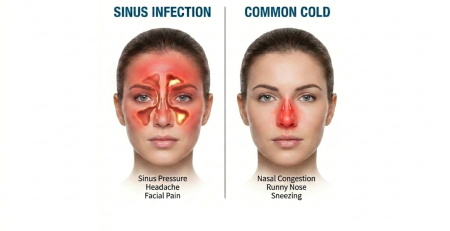
- Sinus infections or colds.
- Allergies.
Most nosebleeds are anterior, meaning they originate from the front of the nose and are simpler to manage. Less commonly, posterior nosebleeds come from deeper vessels and may require medical attention. The steps below are designed for the more common anterior nosebleed.
Immediate First Aid: The Correct Steps
When a nosebleed starts, the key is to stay calm. Anxiety can increase blood pressure and potentially prolong the bleeding. Follow these steps carefully.
Step 1: Sit Up and Lean Forward
This is the most crucial step often misunderstood. Do not lie down or tilt your head back. Leaning back causes blood to run down your throat, which can lead to choking, coughing or a stomach upset.
What to do: Sit upright in a chair. Gently lean your torso and head forward. This position allows blood to drain out of the nose instead of the throat.
Step 2: Apply Direct Pressure
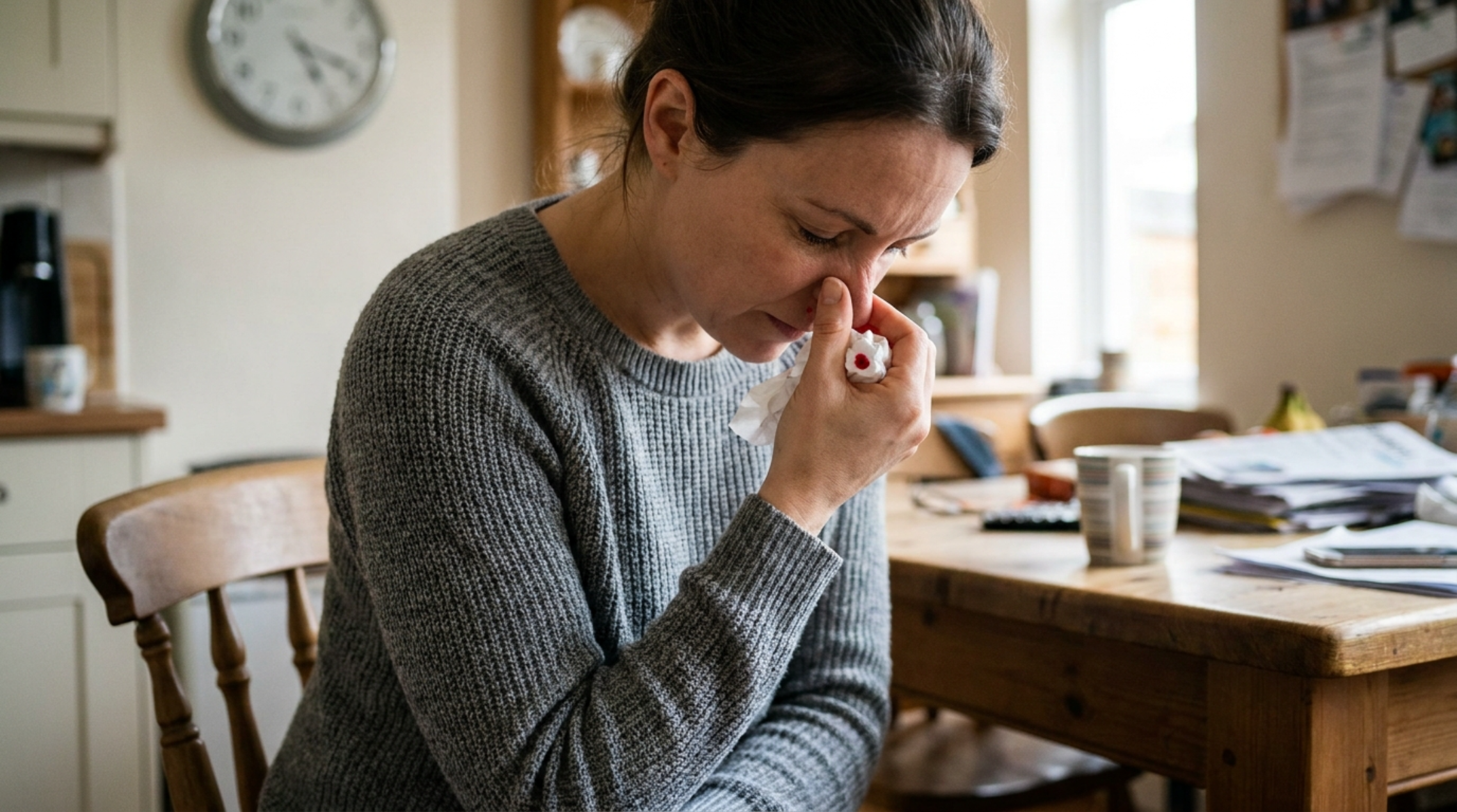
Use your thumb and index finger to pinch the soft part of your nose, just below the bony bridge. You need to pinch firmly so that both nostrils are closed, even if the bleeding is only from one side.
What to do: Maintain this constant pressure for a full 10 to 15 minutes without interruption — start the timer only once you are pinching continuously. Do not keep checking every few minutes to see if bleeding has stopped, as this releases the pressure and disrupts the clotting process. Breathe calmly through your mouth. One common mistake to avoid: do not stuff tissues, cotton wool, or other materials up the nostril. These can disturb the clot and worsen the bleeding when removed.
Optional: some people find a cold pack or cloth-wrapped ice applied across the bridge of the nose gives comfort while maintaining pressure. Evidence for its effectiveness in stopping bleeding is limited, so it should not replace firm, sustained pinching, but it will not cause any harm.
Step 3: Rest and Avoid Irritation
Once the bleeding has stopped, remain in a forward-leaning position for a little while. Avoid blowing your nose, bending over, straining, or picking at it for at least several hours, as this can dislodge the clot and restart the bleeding.
What to do: Try to rest quietly. If you need to sneeze, try to do so with your mouth open to reduce pressure in your nasal passages.
Special Considerations for Children
Nosebleeds are very common in children. The approach is the same, but your manner is key.
- Stay Calm and Reassure: Your calm demeanour will help soothe a frightened child. Use simple, gentle language.
- Guide Them Through the Steps: Help them sit up and lean forward. For a young child, you may need to gently pinch their nose for them, explaining what you are doing.
- Distract Gently: During the 10-15 minutes of pressure, read a story, sing a song, or watch a short video together to help the time pass.
- Check for Underlying Causes: Children are prone to nosebleeds from dry air, allergies, or nose-picking. Using a saline nasal spray can help keep their nasal passages moist.
When to Seek Medical Help
While most nosebleeds can be managed at home, certain signs indicate a need for professional assessment. Contact a healthcare provider or visit a clinic if:
- The bleeding continues for more than 20 minutes despite correct first aid.
- The nosebleed follows a significant injury, such as a fall or blow to the face.
- You suspect a foreign object is stuck in the nose (common in young children).
- You feel weak, dizzy, or lightheaded.
- The bleeding is very heavy or you are swallowing a large amount of blood.
- Nosebleeds are frequent, occurring several times a week.
- You are on blood-thinning medication or have a condition that affects blood clotting. Note: do not stop anticoagulant medication on your own because of a nosebleed — contact your doctor for guidance instead.
At AHS, our ENT specialists are experienced in diagnosing and treating recurrent or severe nosebleeds. Procedures such as cauterisation, which seals the bleeding vessel, can provide a longer-term solution for frequent episodes.
Preventing Future Nosebleeds
If you or your child experience occasional nosebleeds, consider these preventive measures:
- Use a Humidifier: Adding moisture to the air, especially in air-conditioned bedrooms, can prevent nasal membranes from drying out.
- Apply Moisturising Ointment: A small amount of petroleum jelly or saline gel applied gently inside the nostrils using a clean fingertip or cotton bud can protect delicate tissues. Avoid heavy or repeated application of petroleum-based products deep in the nose.
- Practice Gentle Nasal Care: Encourage children not to pick their noses. Blow your nose gently, one nostril at a time.
- Manage Allergies: Effectively treating allergies can reduce inflammation and the need for frequent nose blowing.
A Calm, Informed Approach to Care
A nosebleed, while unsettling, is usually a minor issue that resolves with two straightforward measures: sitting forward and applying sustained pressure. If yours are recurring, heavy, or not stopping with correct first aid, that is a signal worth taking seriously. Our ENT specialists at AHS can identify the underlying cause — whether a prominent vessel in Little’s area, a structural issue, or an allergy-related pattern — and offer targeted treatment including cauterisation where appropriate.
At Asian Healthcare Specialists, our ENT and family medicine teams work together to assess and treat nosebleeds at every level of severity. Book an appointment through our website if you have concerns about recurrent or heavy nosebleeds.
If you have concerns about frequent or severe nosebleeds, consulting a medical professional can provide peace of mind and appropriate care. For more information on our ENT and other specialist services, please visit our website at https://dralextham.asianhealthcare.com.sg/.
Disclaimer: This article is intended for informational purposes only and does not constitute medical advice. Please consult a qualified healthcare professional for diagnosis and treatment tailored to your individual health needs.

Medically reviewed by Dr Alex Tham
Consultant Otorhinolaryngologist – Head and Neck Surgeon
MBBS (Singapore), MRCSEd (ENT), MMED (ORL), FAMS (ORL)